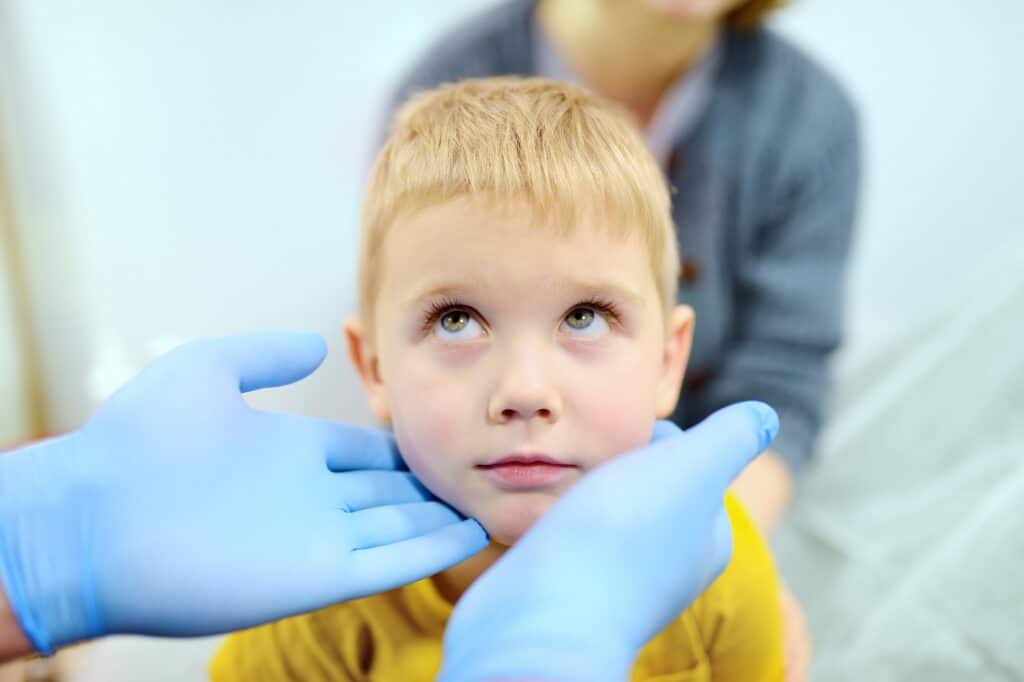
How Does Tooth Position Affect Speech Development in Children? We Explore This Connection Here.
Speech development is a central process in children’s lives. When issues arise, our orthodontics for children can help at an early stage. Parents pay close attention to whether their child forms sounds correctly, speaks clearly, and expresses themselves appropriately for their age. What many don’t know: The position of teeth and jaws can significantly influence speech development.
Certain dental and jaw misalignments can make sound formation more difficult and lead to persistent speech disorders. In this article, we take a look at the close connection between tooth position and speech formation – and explain when an orthodontic evaluation makes sense.
How Does Speech Develop in Children?
Clear pronunciation requires several factors to work together:
-
Tongue
-
Lips
-
Teeth
-
Jaw
-
Oral muscles
-
Breath control
During speech, these structures move in precise coordination with each other. Even small deviations – such as in tooth position or jaw alignment – can intensify pronunciation problems and impair communication.
Which Dental Misalignments Can Affect Speech?
Not every dental misalignment automatically leads to speech problems. However, certain types are more frequently associated with articulation disorders.
Open Bite
With an open bite, the front teeth do not close. Air escapes uncontrollably, which often leads to lisping or unclear pronunciation, as the tongue pushes through the gap when speaking.
Crossbite
A crossbite can alter tongue position and lead to asymmetric sound formation.
Overjet or Underbite
A severely protruding or receding jaw position can make forming sounds like S, Z, T, D, or L more difficult, as the lower lip and incisors do not work together optimally.
Dental Crowding
Too little space in the jaw can restrict tongue mobility and thus hinder correct speech formation.
Typical Speech Irregularities with Dental Misalignments
Parents or educational professionals often notice:
-
Lisping
-
Unclear or slurred pronunciation
-
Substituted or omitted sounds
-
Noticeable tongue position when speaking
-
Mouth breathing instead of nasal breathing
These signs should be taken seriously – especially when they persist beyond what is typical for the child’s age.
Tooth Position, Oral Motor Skills, and Speech Therapy – Why Both Belong Together
In many cases, speech therapy alone is not sufficient when the anatomical conditions are not right.
If the tongue cannot assume the correct position due to tooth or jaw alignment, progress in speech development often remains limited.
An orthodontic treatment can:
-
improve tongue position
-
functionally expand the oral cavity
-
strengthen oral muscles
-
create stable foundations for speech therapy success
This is why orthodontics and speech therapy often work hand in hand.
When should an orthodontic evaluation be considered?
An examination is advisable if:
-
speech problems persist despite speech therapy
-
noticeable tooth or jaw misalignments are visible
-
mouth breathing or incorrect swallowing patterns occur
-
the child frequently keeps their mouth open
-
educators or speech therapists recommend an evaluation
The earlier functional connections are identified, the better developmental steps can be supported.
Early treatment – benefits for speech and jaw development
During childhood, misalignments can be particularly well influenced.
Early interventions can:
-
support natural speech development
-
prevent incorrect movement patterns
-
avoid more extensive therapies later
-
strengthen the child’s self-confidence
Often, simple and gentle measures are sufficient.
Tooth position and speech development in adults
In adults, too, misaligned teeth can affect pronunciation – for example, after tooth migration or with untreated malocclusions.
In such cases, orthodontic correction can also have positive effects on speech quality and communication.
Supporting speech development in children – JUST KFO
At JUST KFO, we always consider tooth position, jaw function, and speech holistically.
Especially with children, it is important to us to identify early on whether functional connections exist.
We:
-
carefully examine tooth and jaw development
-
consider speech-related issues
-
collaborate interdisciplinarily with speech therapists and other specialists when needed
-
provide parents with clear and individualized guidance
If you are uncertain whether your child’s tooth position is affecting their speech development, please feel free to schedule a consultation at our practice.
- Lentini-Oliveira, D. A., Carvalho, F. R., Rodrigues, C. G., et al. (2014). Orthodontic and orthopaedic treatment for anterior open bite in children. Cochrane Database of Systematic Reviews, (9), CD005515. https://doi.org/10.1002/14651858.CD005515.pub3
- Grippaudo, C., Paolantonio, E. G., Antonini, G., et al. (2016). Association between oral habits, mouth breathing and malocclusion. Acta Otorhinolaryngologica Italica, 36(5), 386–394. https://doi.org/10.14639/0392-100X-770
- Baratieri, C., Alves, M., de Souza, M. M. G., et al. (2011). Does rapid maxillary expansion have long-term effects on airway dimensions and breathing? American Journal of Orthodontics and Dentofacial Orthopedics, 140(2), 146–156. https://doi.org/10.1016/j.ajodo.2011.02.019
Frequently asked questions about tooth position and speech development
How does a misaligned tooth position affect speech development in children?
Misaligned teeth can make correct articulation more difficult, as the tongue, lips, and teeth must work together precisely during speech. Misalignments such as open bite or overbite alter the position of the tongue and can therefore lead to speech problems such as lisping or unclear pronunciation.
At what age should an orthodontic evaluation be conducted for speech problems?
It is advisable to have an orthodontic examination performed in early childhood if speech problems persist despite speech therapy or if noticeable tooth and jaw misalignments are visible. The earlier functional connections are identified, the better developmental processes can be supported.
Can braces improve speech development?
Yes, orthodontic treatment can correct the position of teeth and jaws, which improves tongue placement and facilitates pronunciation. Orthodontic therapy is often combined with speech therapy to achieve optimal results in speech development.
What role does oral musculature play in speech problems caused by misaligned teeth?
Oral musculature is crucial for correct articulation. Misaligned teeth can weaken the musculature or cause dysfunction, which impairs speech formation. Targeted strengthening of oral musculature therefore supports therapy and improves speech ability.
Can adults also benefit from orthodontic treatment to improve speech?
Yes, even in adults, misaligned teeth can negatively affect pronunciation. Orthodontic correction can improve speech quality and thus facilitate communication, even if the misalignment has existed for a long time.

Dr. Julia Steinmaier
Specialist in orthodontics. Owner of JUST KFO in Cologne, sought-after speaker and author who regularly appears in professional publications and media.
Full profile →Related Posts
These blog posts might also interest you.
 Jan 10, 2026Open Bite – Causes, Consequences, and Modern Treatment OptionsRead more →
 Feb 14, 2026Recognizing and Treating Crossbite – Why Early Action Is So ImportantRead more →
 Nov 25, 2025Misaligned Teeth: Causes and PreventionRead more →
Reviewed by Dr. med. dent. Julia Steinmaier, specialist in orthodontics · Last reviewed on June 25, 2026
Your orthodontist in Cologne!
Schedule your no-obligation consultation at JUST KFO – Dr. Steinmaier & Kollegen in Cologne.