Teeth grinding often results from an interplay of stress and sleep factors — not from a single cause. If you don’t know the true triggers, a night guard addresses the symptom but not the underlying reason. This guide distinguishes seven common types of causes — with concrete identifying features so you can place yourself. It does not replace a medically sound diagnosis, but afterward you will know which next step makes sense: stress management, orthodontic functional analysis, or sleep medicine.
Quick overview: In adults , stress (cause 1) and sleep disorders (cause 2) are common triggers. In children, growth-related grinding (cause 7) predominates. Structural causes such as misaligned teeth (cause 3) or temporomandibular joint problems (cause 4) are often underestimated; an orthodontic functional analysis shows whether they are involved.
Awake or Sleep Bruxism — The Most Important Distinction First
Teeth grinding occurs in two forms that have different causes and are treated differently. This distinction determines which of the following seven causes are relevant for you.
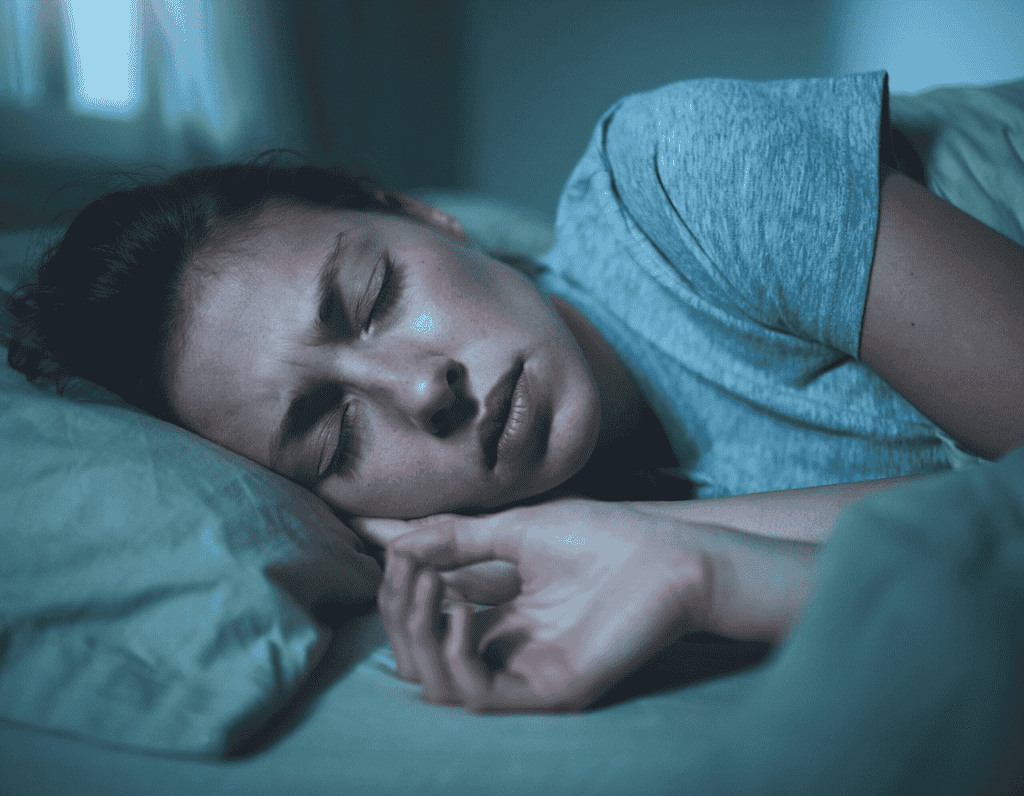
Sleep bruxism occurs unconsciously at night and is closely linked to sleep architecture, airway disorders, and nighttime stress processing. Typical identifying feature: You wake in the morning with jaw pain, a tense neck, or headaches, without remembering anything. Your partner may report audible grinding sounds.
Awake bruxism happens during the day during concentration, stress, or unconscious teeth clenching. Typical identifying feature: You catch yourself at your desk with your teeth pressed together. Your jaw muscles are tired or pressure-sensitive after long workdays.
Both forms can occur individually, but in practice they often combine. Those who show both are usually looking for two different causes simultaneously.
Cause 1: Acute and Chronic Stress
Stress is one of the most frequently cited triggers for teeth grinding, especially for daytime clenching. Studies find greater activity in the masticatory muscles among people with sustained psychological stress. Grinding is considered in part an unconscious response to tension.
How to recognize this cause in yourself:
- The grinding started or intensified during a professionally or privately stressful phase.
- You wake in the morning after particularly demanding days with jaw pain.
- During calm vacation weeks, the grinding measurably subsides.
- You catch yourself clenching your teeth during the day — especially during concentration or sensory overload.
- Your partner reports that the nighttime grinding becomes louder and longer during stressful weeks.
What helps: Stress management through progressive muscle relaxation, mindfulness training, or exercise can noticeably reduce grinding. Targeted jaw relaxation exercises also help. A night guard protects the teeth but does not address the underlying cause.
Cause 2: Sleep Disorders and Sleep Apnea
In people with obstructive sleep apnea, sleep bruxism is more common than in the general population (Kuang et al. 2022). It is discussed that grinding here is part of a brief awakening reaction (micro-arousal) through which the brain responds to a breathing pause and reopens the airways; the exact mechanism has not yet been clarified.
How to recognize this cause in yourself:
- You snore loudly, or your partner reports pauses in breathing during the night.
- You wake up unrefreshed in the morning—even after 8 hours of sleep.
- You experience daytime concentration problems or microsleep episodes.
- Your blood pressure is elevated without any other identifiable cause.
- You have an elevated BMI or a short neck (neck circumference over 43 cm in men, 41 cm in women).
- The grinding occurs more frequently when sleeping on your back.
What helps: If sleep apnea is suspected, the first step is to a sleep laboratory — not to the dentist. If the diagnosis is confirmed, a mandibular advancement device or, depending on findings, orthodontic expansion of the airways (Airway Orthodontics) may be considered, in coordination with sleep medicine.
Cause 3: Misaligned Teeth and Malocclusion
If the upper and lower jaws do not relate harmoniously to each other, the masticatory muscles can be unevenly loaded. How large the contribution of the bite to grinding is evaluated differently in the professional community. However, misalignment can distribute forces unfavorably during grinding, so that individual teeth, muscles, or a temporomandibular joint are subjected to greater stress.
How to recognize this cause in yourself:
- You have a crossbite, deep bite , or open bite—visible in the mirror when you bite down.
- Orthodontic treatment was discontinued or never performed during childhood or adolescence.
- After receiving a new crown, bridge, or filling, your bite changed and the grinding began.
- You notice that your tooth rows do not make even contact when biting together.
- One side of your jaw is noticeably more worn than the other.
What helps: The diagnosis of a malocclusion is made through an orthodontic functional analysis. If a misalignment is found that overloads teeth or the temporomandibular joint, orthodontic treatment can distribute forces more evenly. Whether grinding decreases afterward varies from person to person; above all, the teeth that were previously particularly stressed are relieved.
Cause 4: Temporomandibular Disorder (TMD)
An existing functional disorder in the temporomandibular joint can both trigger and intensify teeth grinding. In TMD — temporomandibular disorder, often called TMJ — the movement control of the lower jaw is disturbed, and the masticatory muscles often work unevenly; this can promote nocturnal grinding.
How to recognize this cause in yourself:
- Your jaw pops, jumps, or grinds when opening or closing.
- Your mouth opening is limited—fewer than three fingers fit vertically between your incisors.
- You have recurring headaches, ear noises, tinnitus, or dizziness.
- Pain radiates from the jaw to the temple, ear, neck, or shoulders.
- The symptoms have persisted for months or years and have not been explained by primary care physicians, ENT specialists, or orthopedists.
What helps: An instrumental functional analysis makes the disturbed jaw movement visible in three dimensions and shows whether a functional disorder is involved. TMD treatment combines splint therapy, physical therapy, and, if necessary, orthodontic correction.
Cause 5: Medications and Substances
Certain medications and substances can increase the risk of bruxism – an often overlooked point, as those affected rarely make the connection. Particularly relevant are serotonergic antidepressants (SSRIs), amphetamine derivatives, antipsychotics, and stimulants such as caffeine and nicotine, as well as alcohol.
How to recognize this cause in yourself:
- The grinding began soon after starting a new medication (in published case reports on antidepressants, often within three to four weeks).
- You consume more than 4 cups of coffee per day or regularly drink late espresso.
- You smoke or consume nicotine in the form of vapes or snus.
- Alcohol consumption in the evening intensifies the morning jaw tension sensation.
- You take stimulants for ADHD or antidepressants.
What helps: A conversation with your treating physician about possible dose adjustment or alternatives—never discontinue medications on your own. For recreational substances, consistent reduction helps, especially in the last 4 hours before bedtime.
Cause 6: Mouth Breathing and Narrowed Airways
Those who breathe through the mouth instead of the nose permanently alter the position of the lower jaw and tongue. The tongue then rests on the floor of the mouth instead of the palate, the lower jaw tilts backward, and the airways narrow. It is discussed that grinding here – similar to sleep apnea – is related to keeping the airways open; however, this mechanism has not yet been conclusively proven.
How to recognize this cause in yourself:
- You frequently breathe through your mouth during the day—especially during concentration or exertion.
- You wake up in the morning with a dry mouth or sore throat.
- You had chronic tonsil or adenoid problems in childhood.
- Your nose is frequently congested; you suffer from chronic sinusitis or allergies.
- Your palate is high and narrow (visible in the mirror).
What helps: An ENT evaluation of nasal breathing is the first step. In cases of structural narrowing (such as a narrow upper jaw), orthodontic palatal expansion can open the airways long-term. In adults, myofunctional therapy to restore nasal breathing is an effective complement.
Cause 7: Growth and Dental Development in Children
When children grind their teeth, the cause is usually harmless and temporary. The jaw and teeth grow in spurts, and in mixed dentition, the contacts between the dental arches change continuously. Nighttime grinding is common in children; the figures in studies vary widely depending on age and survey method.
How to recognize this cause in yourself or your child:
- The child is between 3 and 10 years old.
- The grinding occurs at night, and the child has no pain.
- There are no accompanying symptoms such as headaches or sleep disturbances.
- The primary teeth show slight wear, but no fractures.
- The grinding often coincides with phases of tooth transition.
What helps: In most cases, no active treatment is necessary. However, if grinding continues beyond age 10, is accompanied by pain, or the permanent teeth show significant wear, an orthodontic consultation is advisable. More on this in the article When Children Grind Their Teeth.
How to Determine Your Dominant Cause
In practice, adults often show a combination of several causes. This sequence helps you narrow down the probable main issue:
- Onset: When did the grinding start or intensify? A connection to a stressful period, a new medication, or a dental procedure points to Cause 1, 5, or 3.
- Timing: Do you grind at night, during the day, or both? Sleep bruxism points more toward Cause 2, 4, or 6. Awake bruxism points more toward Cause 1.
- Accompanying symptoms: Snoring or daytime fatigue point to Cause 2. Jaw popping or radiating pain point to Cause 4. Visible misaligned teeth point to Cause 3.
- Age: In children under 10 years, cause 7 is likely. In adults, causes 1 and 2 are most frequently mentioned.
When to seek medical evaluation: If grinding persists for more than 3 months, is accompanied by pain, affects your sleep or quality of life — or if you cannot confidently assign yourself to one of the seven causes. An orthodontic functional analysis clarifies structural causes, while a sleep medicine evaluation can detect sleep apnea.
How we diagnose teeth grinding at JUST KFO
After booking your initial consultation appointment, you will receive a link via text message or email to our digital medical history form “Nelly”. There we ask about symptoms, sleep, medications, and previous dental treatments so we can make the best use of your appointment.
In the practice, we palpate the chewing muscles and temporomandibular joints, measure mouth opening, and check the bite. With the intraoral scanner, we capture the dental arches and document signs of wear. Functional analysis is part of every treatment plan at our practice. If the findings require digital temporomandibular joint measurement, we record the jaw movement three-dimensionally with the DMD system in a separate appointment.
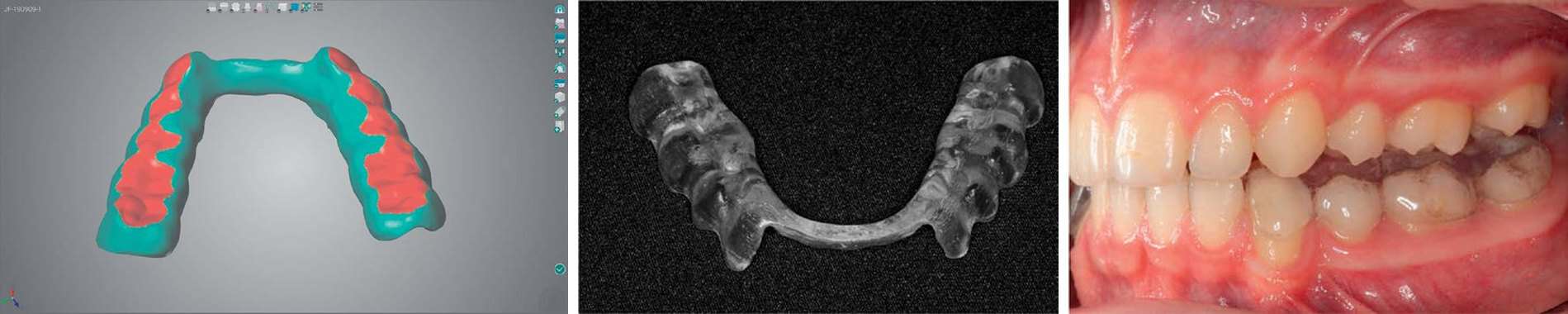
If a splint is appropriate, we design it on the computer based on the scan and fabricate it in our in-house laboratory using 3D printing. This digital workflow was described by Dr. Steinmaier (née Funke) as co-author in a professional publication. The splint protects the teeth and relieves muscle tension; it does not treat the cause of grinding. Therefore, we also discuss with you whether sleep medicine, ENT, physical therapy, or orthodontic correction should be part of the treatment.
What You Can Do Immediately on Your Own
Regardless of which of the seven causes dominates in your case, there are four measures that make sense in every situation and require no medical order:
- Relieve jaw muscles: Daily jaw relaxation exercises reduce baseline tension in the masticatory muscles.
- Train tongue resting position: Tongue tip behind the upper front teeth, a gap of 2–3 mm between the tooth rows, lips gently closed. Maintain this position consciously throughout the day.
- Reduce stimulants: Caffeine, alcohol, and nicotine are considered risk factors for grinding. Therefore, avoid coffee in the late afternoon and alcohol in the evening as much as possible.
- Improve sleep hygiene: Fixed sleep times, cool bedroom, no screens in the last hour — this stabilizes sleep architecture and reduces micro-arousals.
Next step: Functional diagnostics
If your grinding persists, progresses to pain, or you cannot clearly identify the cause, professional functional diagnostics is the next sensible step. In our practice in Cologne-Rodenkirchen, Hauptstr. 50, we examine muscles, temporomandibular joints, and bite and discuss with you which treatment fits your findings. Appointments at 0221 93 53 020 or online.
- Schupp, W., Haubrich, J., & Funke, J. (2020). Behandlung mit Okklusionsschienen und deren Herstellung im digitalen Workflow. Informationen aus Orthodontie & Kieferorthopädie, 52(3), 227–231. https://doi.org/10.1055/a-1200-5934 (J. Funke = Dr. Julia Steinmaier)
- Deutsche Gesellschaft für Funktionsdiagnostik und -therapie (DGFDT) & DGZMK. S3-Leitlinie: Diagnostik und Behandlung von Bruxismus. AWMF-Registernr. 083-027, Version 2.1 (Januar 2026). register.awmf.org
- Lobbezoo, F., Ahlberg, J., Raphael, K. G., et al. (2018). International consensus on the assessment of bruxism: Report of a work in progress. Journal of Oral Rehabilitation, 45(11), 837–844. https://doi.org/10.1111/joor.12663
- Schupp, W., Haubrich, J., & Neumann, I. (2010). Invisalign treatment of patients with craniomandibular disorders. International Orthodontics, 8(3), 253–267. https://doi.org/10.1016/j.ortho.2010.07.010
- Garrett, A. R., & Hawley, J. S. (2018). SSRI-associated bruxism: A systematic review of published case reports. Neurology: Clinical Practice, 8(2), 135–141. https://doi.org/10.1212/CPJ.0000000000000433
- Mottaghi, A., Menéndez-Díaz, I., Cobo, J. L., González-Serrano, J., & Cobo, T. (2019). Is there a higher prevalence of tinnitus in patients with temporomandibular disorders? A systematic review and meta-analysis. Journal of Oral Rehabilitation, 46(1), 76–86. https://doi.org/10.1111/joor.12706
- Kuang, B., Li, D., Lobbezoo, F., et al. (2022). Associations between sleep bruxism and other sleep-related disorders in adults: A systematic review. Sleep Medicine, 89, 31–47. https://doi.org/10.1016/j.sleep.2021.11.008
Common questions about the causes of teeth grinding
What is the most common cause of teeth grinding?
In adults, stress and psychological strain are most frequently associated with grinding. Sleep disorders such as obstructive sleep apnea are also frequently mentioned. Often, several causes interact. In children under 10 years of age, however, growth-related grinding dominates, which in most cases is harmless and resolves on its own.
Can a misaligned bite really trigger teeth grinding?
It can contribute, but is rarely the sole cause. A new crown or filling that is too high can trigger discomfort and should be checked soon. A functional analysis shows whether the bite overloads teeth or the temporomandibular joint.
Why do I grind my teeth at night even though I am not stressed?
If stress is ruled out as the cause, sleep apnea, a misaligned bite, or temporomandibular joint dysfunction are the most likely culprits. Sleep apnea is especially often overlooked because many affected individuals do not realize they briefly stop breathing at night. Snoring, morning fatigue despite adequate sleep duration, and elevated blood pressure are classic warning signs.
Can medications cause teeth grinding?
Yes – serotonergic antidepressants (SSRIs), antipsychotics, and stimulants such as ADHD medications can trigger or intensify bruxism. The connection is well documented: In antidepressants, case reports describe an onset frequently within three to four weeks after starting therapy. Speak with your treating physician before discontinuing or switching a medication – never act on your own.
Does teeth grinding go away on its own?
Growth-related grinding in children frequently subsides with the completion of tooth eruption. Stress-related grinding in adults can decrease after the trigger is removed, but frequently returns. If sleep apnea, TMD, or a distressing misalignment is behind it, these should be treated as well. Anyone who has grinding for longer than 3 months should have the cause clarified by a specialist.
Is teeth grinding related to jaw problems or tinnitus?
Frequently yes: Long-term teeth grinding can overload the temporomandibular joint and promote or intensify temporomandibular disorder (TMD). The temporomandibular joint and ear are located close together and share nerve pathways. A review found ear noise in people with TMD significantly more frequently (35.8 to 60.7 percent) than in people without TMD (9.7 to 26.0 percent).
Is teeth grinding hereditary?
A genetic component is considered likely, but has not been conclusively proven scientifically. Family studies show an increased risk when parents or siblings grind their teeth — however, a clear hereditary pattern like that of classic genetic diseases has not been established. More likely is a genetic predisposition that, in combination with stress, sleep disorders, or misaligned teeth, makes grinding more likely.

Dr. Julia Steinmaier
Specialist in orthodontics. Owner of JUST KFO in Cologne, sought-after speaker and author who regularly appears in professional publications and media.
Full profile →Related Posts
These blog posts might also interest you.
 Jun 17, 2026Jaw Relaxation Exercises: 7 Effective Exercises for Immediate ReliefRead more →
 Nov 25, 2025What Is Bruxism? When Teeth Are Under Pressure at NightRead more →Jun 16, 2026One-Sided Jaw Pain: Causes, Classification, and When Evaluation Makes SenseRead more →
Reviewed by Dr. med. dent. Julia Steinmaier, specialist in orthodontics · Last reviewed on June 24, 2026
Your orthodontist in Cologne!
Schedule your no-obligation consultation at JUST KFO – Dr. Steinmaier & Kollegen in Cologne.