What this is about: everyday life with fixed braces in school, sports and leisure. If a wire pokes or a bracket comes off, see Braces emergency; specifically for sports Braces and sports. How to clean: Cleaning your braces. About treatment: Orthodontics for children and adolescents.
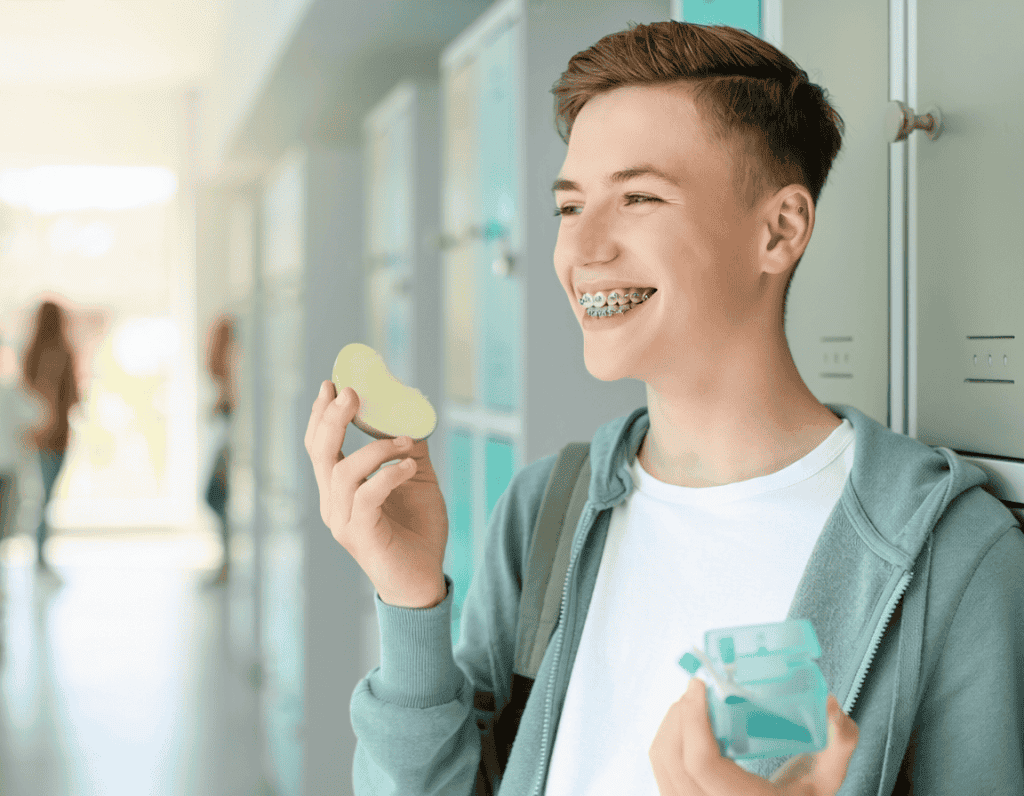
Braces are simply part of life for many teenagers — and yet new questions come up all the time: What can I eat at school? What do I do when everything gets stuck after a snack? And how do I keep my braces clean when I’m on the go?
The good news: with a few simple routines, wearing fixed braces quickly becomes “normal.” In this post, you’ll find practical tips for eating, care, and typical situations at school, in sports, and during free time — without stress and without unnecessary detours.
What is normal at first?
Especially in the first few days after getting or adjusting fixed braces, many things feel unfamiliar. Common experiences include:
- pressure or pulling sensation on the teeth
- sensitive spots when chewing
- sore cheeks or lips (from friction)
- more food debris around brackets and wires
This is usually temporary. If something hurts persistently or a wire pokes, the orthodontist should check it — more on that in our post on braces emergencies.
Eating with braces at school: What works well?
At school, things often need to happen quickly — which is exactly why it’s worth planning braces-friendly snacks.
Good choices include:
- soft bread or wraps (without hard crusts)
- bananas, berries, soft fruit (apples are better cut into small pieces)
- yogurt, quark, pudding, soups
- cheese in pieces, soft sandwiches
- cooked pasta, rice dishes, soft vegetables like potatoes
- scrambled eggs or omelets (prepared at home as a snack box)
Practical tip: Cut rather than bite. Anything you would normally “bite into” (apple, roll, carrot) is better cut into small pieces. This protects brackets and wires.
Which foods are more risky?
You don’t have to “forbid” everything — but some foods increase the risk of something breaking or coming loose.
Better to avoid (or be very careful with):
- hard bread crusts, nuts, hard cookies
- sticky sweets (caramel, toffee, chewy candies)
- popcorn (kernels love to get stuck)
- very hard raw vegetables (carrots, hard apples — if you eat them, cut them small)
- chewing gum (unless expressly permitted and sugar-free — depending on your system)
If a bracket or band comes loose, it’s usually not a “disaster” — but it delays treatment and is naturally annoying when you’re out and about.
The most important hack: mini care kit for on the go
This makes everyday life much more relaxed — and fits in any backpack.
At JUST KFO, every patient receives a small braces kit at the start of treatment:
- travel toothbrush
- small toothpaste
- interdental brush
- dental floss (if recommended)
- orthodontic wax
- small mirror (optional, but helpful)
This way, braces wearers can quickly check and clean after eating — completely stress-free.
Quick cleaning after a snack break: How to do it discreetly
There isn’t always time for “deluxe tooth brushing.” At school, a brief routine is often enough:
- Rinse with water (food debris comes loose surprisingly well)
- Quick brushing – especially along the brackets
- Interdental brushes for spots where food is stuck
- Quick check in the mirror – done
If there’s no time at all: at least rinse thoroughly and brush properly at home. Better than nothing.
Avoiding bad breath: What really helps
With fixed braces, food particles get stuck more easily – which can contribute to bad breath.
Helpful measures:
- regular brushing (at least morning and evening, ideally after every meal)
- interdental brushes for brackets and spaces between teeth
- drinking enough water
- sugar-free chewing gum only if approved by your orthodontist
- cleaning your tongue (briefly with a brush or tongue scraper)
Important: Mouthwash is not a substitute for brushing – but can be a useful addition.
Sports, music, leisure: What to keep in mind?
Sports
For contact sports (e.g., basketball, handball, martial arts), a mouthguard can be useful – especially to protect your lips and oral mucosa and prevent injuries. Talk to us about which solution works for you. For more on sports with braces, see our article Braces and Sports.
Wind instruments
At first, fixed braces can feel tight or rub. Many get used to it quickly. Wax can help if brackets irritate.
School trips & sleepovers
This is where the mini care kit is worth its weight in gold. Also useful:
- spare interdental brushes
- wax (more than you think)
- if applicable: a small container for elastics or appliances
Motivation & routine: Keeping it realistic
Teens don’t need perfect “10/10 care” every day. What helps is a routine that’s actually doable:
- start clean in the morning
- thorough brushing in the evening (this is when most of the work happens)
- on the go, keep it practical: rinse, quick brush, check
- if there are sore spots: use wax, don’t just tough it out
When teens understand that good oral hygiene shortens treatment time and prevents cavities and plaque, motivation often increases on its own.
Braces for teens in Cologne – JUST KFO is here for you
School, sports, friends, free time – life goes on, even with braces. With the right tips, braces quickly become routine, and orthodontic treatment stays on track.
At JUST KFO in Cologne, we support teens and parents not only with treatment itself, but also with practical information for everyday life – so teeth and gums stay healthy and the final result is truly convincing.
Feel free to schedule an appointment – we’ll take the time to answer your questions.
Frequently asked questions: Braces & everyday life for teens
How can I eat discreetly at school with fixed braces and keep them clean?
At school, it’s helpful to prepare soft, braces-friendly snacks that are easy to eat without damaging the brackets. After eating, a quick clean with water, a travel toothbrush, and interdental brushes is recommended to remove food particles. A small mirror can help you check your braces discreetly.
What should I do if a bracket or wire comes loose or pokes?
If a bracket or wire comes loose or pokes uncomfortably, it’s important to schedule an appointment with your orthodontist as soon as possible. In the meantime, orthodontic wax can help cover sharp spots and prevent irritation in your mouth.
How long does the adjustment period last when wearing fixed braces?
Most braces wearers get used to the pressure and the changed feeling in their mouth within a few days to weeks. Initially, sensitive spots and a slight lisp may occur, which usually improve on their own over time.
Which foods should be avoided with fixed braces?
Hard, sticky, or very chewy foods like nuts, caramel, or hard bread crusts can damage your braces or make food particles difficult to remove. It’s better to avoid such foods or cut them into small pieces to protect your braces.
How important is oral hygiene during treatment with braces?
Careful oral hygiene is crucial to prevent plaque, cavities, and inflammation. After every meal, your teeth and braces should be cleaned, ideally with a toothbrush, interdental brushes, and if needed, mouth rinses to maintain dental health during orthodontic treatment.

Dr. Julia Steinmaier
Specialist in orthodontics. Owner of JUST KFO in Cologne, sought-after speaker and author who regularly appears in professional publications and media.
Full profile →Related Posts
These blog posts might also interest you.
 Sep 27, 2025Cleaning Braces: Fixed Braces, Removable Appliances, Aligners and RetainersRead more →
 Jun 20, 2026Braces Emergency: Wire Poking, Bracket Loose — What to Do?Read more →Nov 25, 2025Removable Appliance: Care and Wearing Times OverviewRead more →
Reviewed by Dr. med. dent. Julia Steinmaier, specialist in orthodontics · Last reviewed on June 21, 2026
Your orthodontist in Cologne!
Schedule your no-obligation consultation at JUST KFO – Dr. Steinmaier & Kollegen in Cologne.