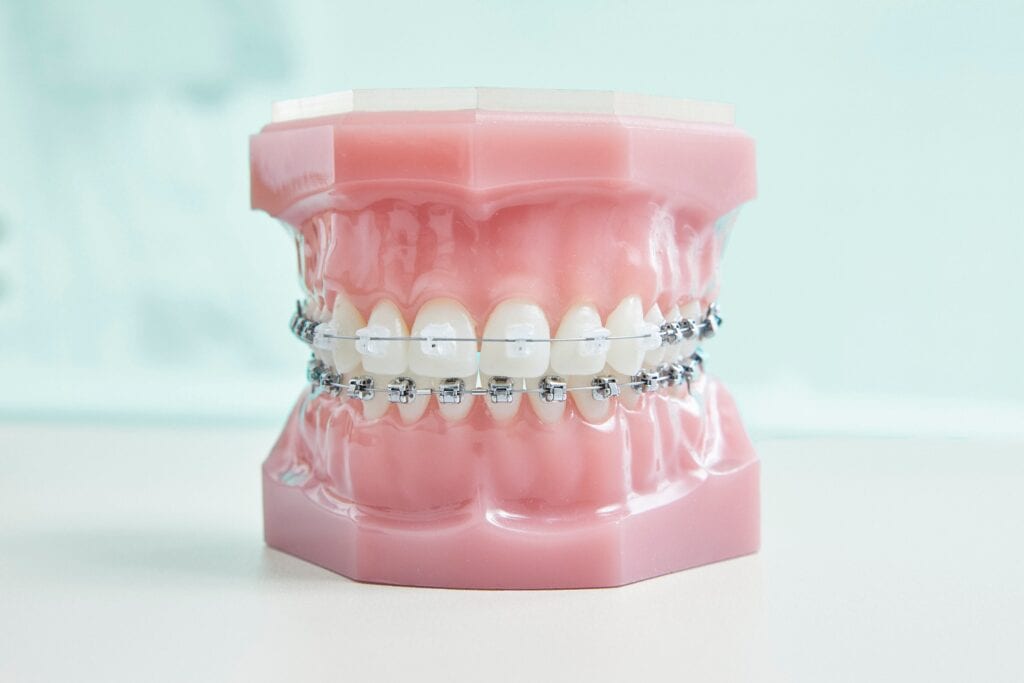
After months or even years of orthodontic treatment, the moment has finally arrived: the braces are removed, and the new smile is revealed. But even though the active treatment phase is complete, follow-up care remains a crucial part of success. Only with consistent retention and regular check-ups can the achieved results be secured long-term.
In this article, you will learn what is important in the phase after braces, what types of retainers are available, and what to watch for in care and monitoring.
Why is post-treatment so important?
After braces are removed, the teeth are not yet firmly anchored in their new position. The periodontal apparatus needs time to adapt to the new alignment. Without targeted stabilization, there is a risk that the teeth will shift back – a phenomenon known as relapse.
Post-treatment ensures that the result is permanently maintained. This includes:
-
Retention: Stabilization of tooth alignment with retainers.
-
Follow-up appointments: Monitoring tooth position and the retainer.
-
Care & hygiene: Proper cleaning to prevent inflammation and damage.
Only through consistent follow-up care can the beautiful result be secured long-term.
What types of retainers are there?
Depending on the individual situation and treatment outcome, orthodontists recommend different retention systems. Basically, there are fixed and removable retainers.
Fixed retainer:
A thin wire permanently bonded to the inside of the front teeth.
Benefits:
-
Invisible in everyday life
-
No forgetting to wear it
-
Particularly stable
Disadvantages:
-
Slightly more intensive cleaning required
-
Regular monitoring necessary
Removable retainer:
A clear aligner (similar to an aligner) worn at night.
Benefits:
-
Easy to clean
-
No permanent attachment
-
Ideal as a supplement to the fixed retainer
Disadvantages:
-
Requires discipline in wearing
-
Risk of forgetting or losing it
Many patients combine both options to achieve maximum stability.
How long must a retainer be worn?
How long retention lasts depends on the individual initial situation. In most cases, orthodontists recommend wearing the retainer for several years, sometimes even permanently.
The reason is that teeth can continue to move even in adulthood – for example, due to chewing forces, tooth loss, or natural aging processes.
A rule of thumb is:
The retainer should be worn for at least as long as the braces were worn.
Permanent retainers offer the best protection against relapse of tooth alignment.
Monitoring and care after braces
Even after active treatment is complete, regular checkups should continue. These appointments serve to examine the fixed or removable retainer and ensure that no shifting occurs.
Recommended schedule:
-
First checkup: Approximately 4–6 weeks after braces removal
-
Follow-up appointments: Every 6–12 months for examination and cleaning
Daily care includes:
-
Thorough oral hygiene: Soft toothbrushes and dental floss for hard-to-reach areas
-
Interdental brushes: For the area around the fixed retainer
-
Regular professional cleanings: To prevent tartar buildup and inflammation
With a little routine, the retainer can easily be integrated into daily care.
What to do if teeth shift again?
Despite careful retention, teeth may shift slightly in rare cases. This is usually no cause for concern — the key is to respond early.
Possible measures:
-
Checkup with your orthodontist: Check whether the retainer is damaged or loose
-
Adjustment or repair: If the retainer needs to be replaced
-
Short-term aligner therapy: Minor corrections can often be easily retreated
The earlier the change is detected, the easier it is to restore the ideal tooth position.
Retainers secure the result
Retention is the key to preserving the result of braces long-term. With proper care, regular checkups, and some discipline, your new smile remains beautiful and stable for years to come.
If you have questions about retention or care, contact your treating orthodontist directly — this keeps your result optimally protected.
- Martin, C., Littlewood, S. J., Millett, D. T., et al. (2023). Retention procedures for stabilising tooth position after treatment with orthodontic braces. Cochrane Database of Systematic Reviews, (5), CD002283. https://doi.org/10.1002/14651858.CD002283.pub5
- Batista, K. B. S. L., Thiruvenkatachari, B., Harrison, J. E., & O’Brien, K. D. (2018). Orthodontic treatment for prominent upper front teeth (Class II malocclusion) in children and adolescents. Cochrane Database of Systematic Reviews, (3), CD003452. https://doi.org/10.1002/14651858.CD003452.pub4
- Rossini, G., Parrini, S., Castroflorio, T., Deregibus, A., & Debernardi, C. L. (2015). Efficacy of clear aligners in controlling orthodontic tooth movement: A systematic review. The Angle Orthodontist, 85(5), 881–889. https://doi.org/10.2319/061614-436.1
FAQs
How long does retention last after braces?
Typically several years, often permanently — depending on individual circumstances and tooth movement.
What happens if I don’t wear my retainer?
Teeth can shift again. Consistent wear is essential to stabilize the result.
How often do I need checkups?
Initially every few months, later usually once or twice a year.
Can a retainer break?
Yes. If the wire comes loose or breaks, it should be repaired or replaced by your orthodontist soon.
How do I clean my retainer properly?
Best with a soft brush and mild cleanser. Removable retainers can also be cleaned with special cleaning tablets.

Dr. Julia Steinmaier
Specialist in orthodontics. Owner of JUST KFO in Cologne, sought-after speaker and author who regularly appears in professional publications and media.
Full profile →Related Posts
These blog posts might also interest you.
 Sep 27, 2025How Long to Wear Braces: How Long Do Braces Need to Be Worn?Read more →Sep 27, 2025How to Clean Fixed Braces Properly – Here’s HowRead more →Mar 16, 2025Invisalign and Aligners: Advantages and Disadvantages at a GlanceRead more →
Reviewed by Dr. med. dent. Julia Steinmaier, specialist in orthodontics · Last reviewed on September 6, 2026
Your orthodontist in Cologne!
Schedule your no-obligation consultation at JUST KFO – Dr. Steinmaier & Kollegen in Cologne.